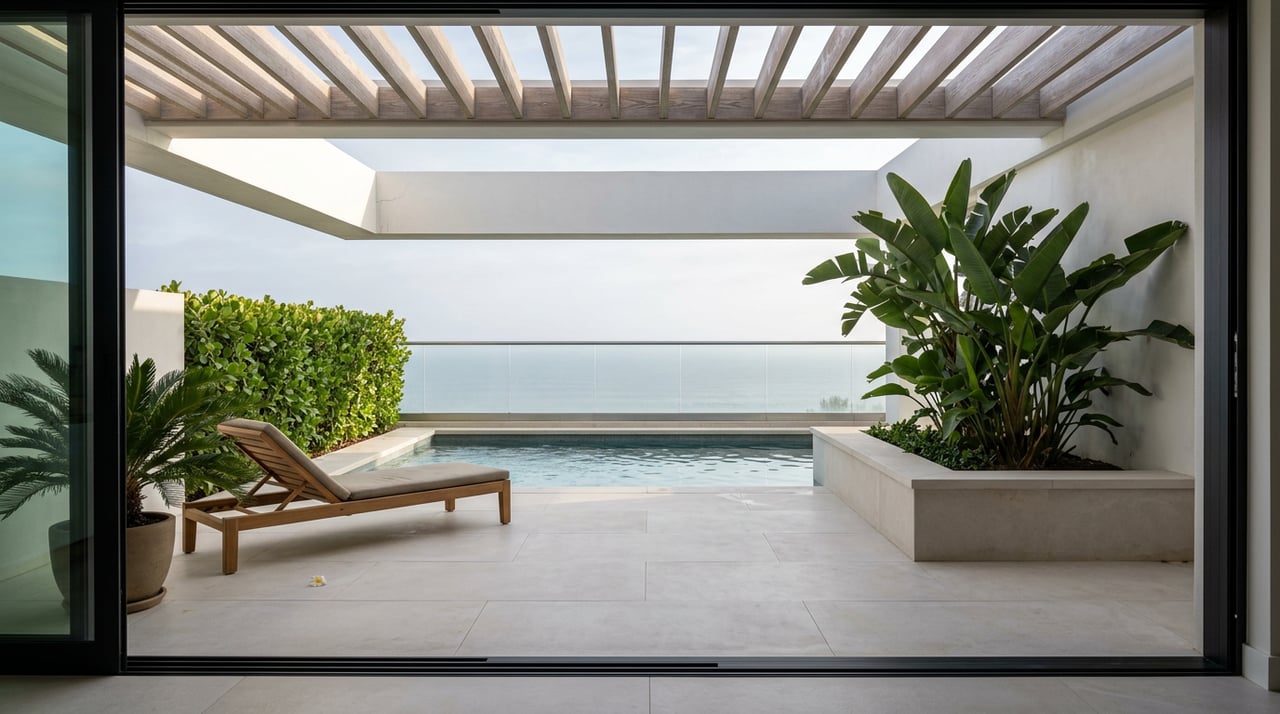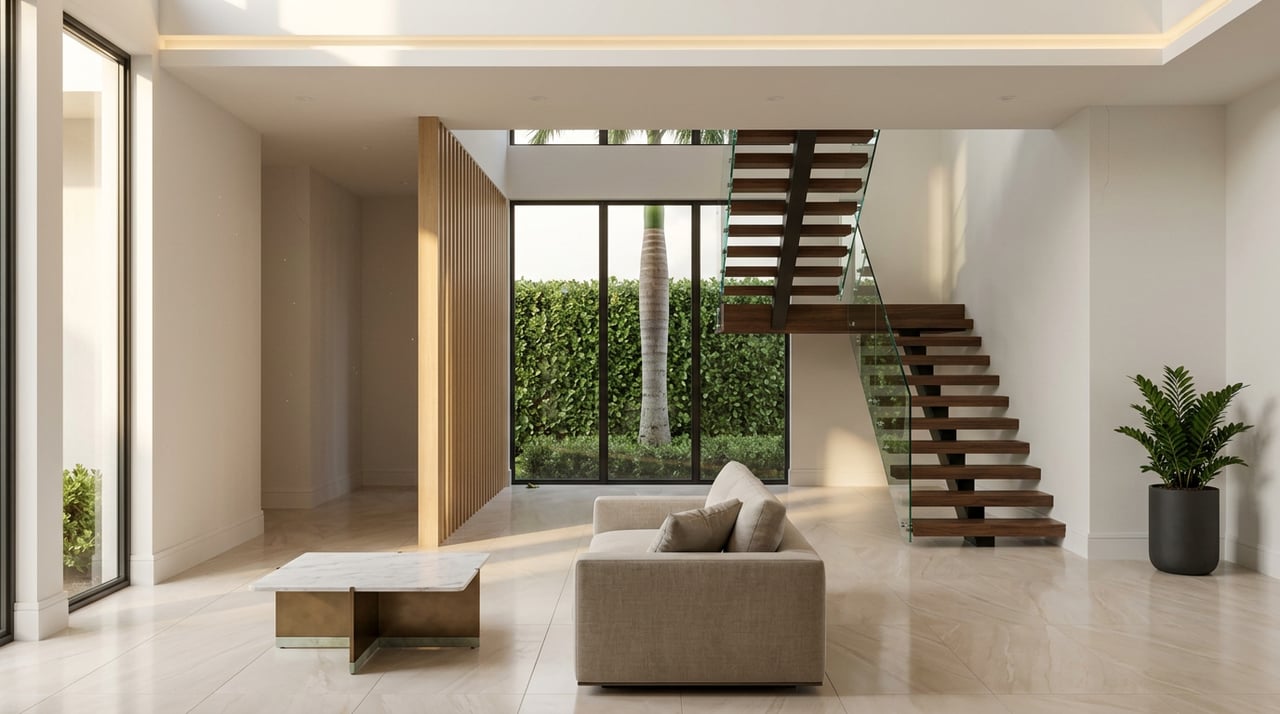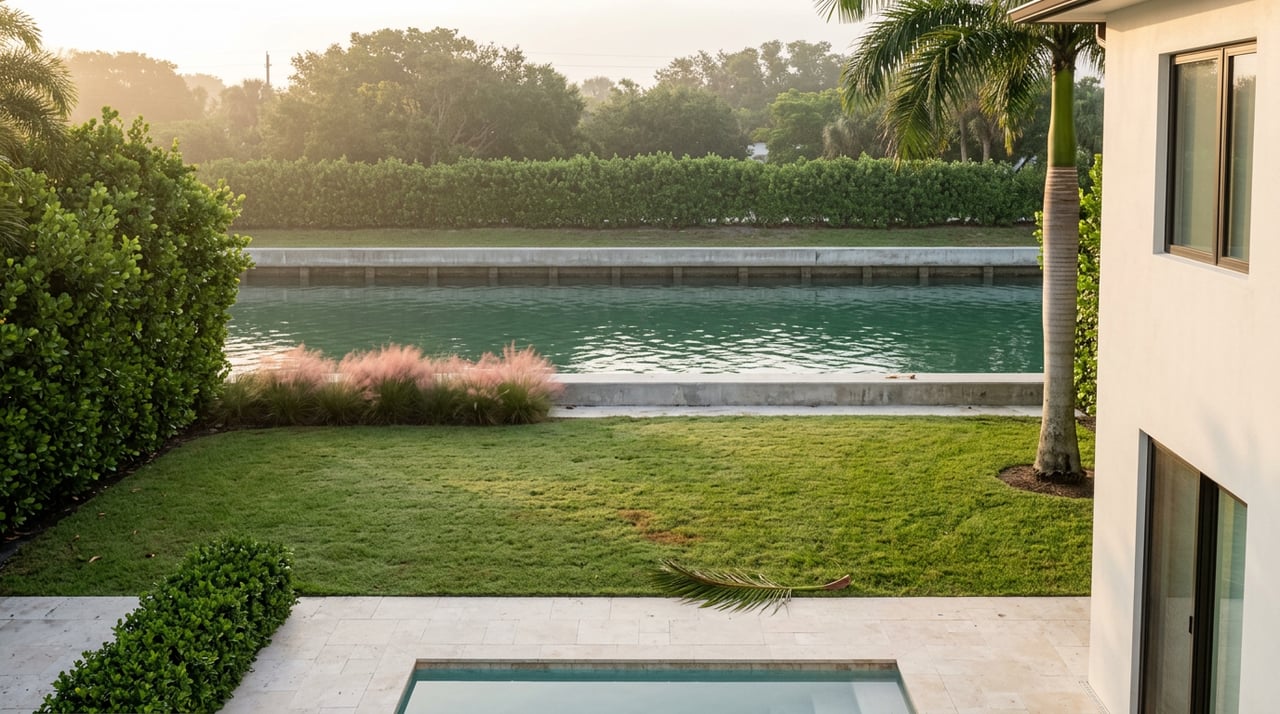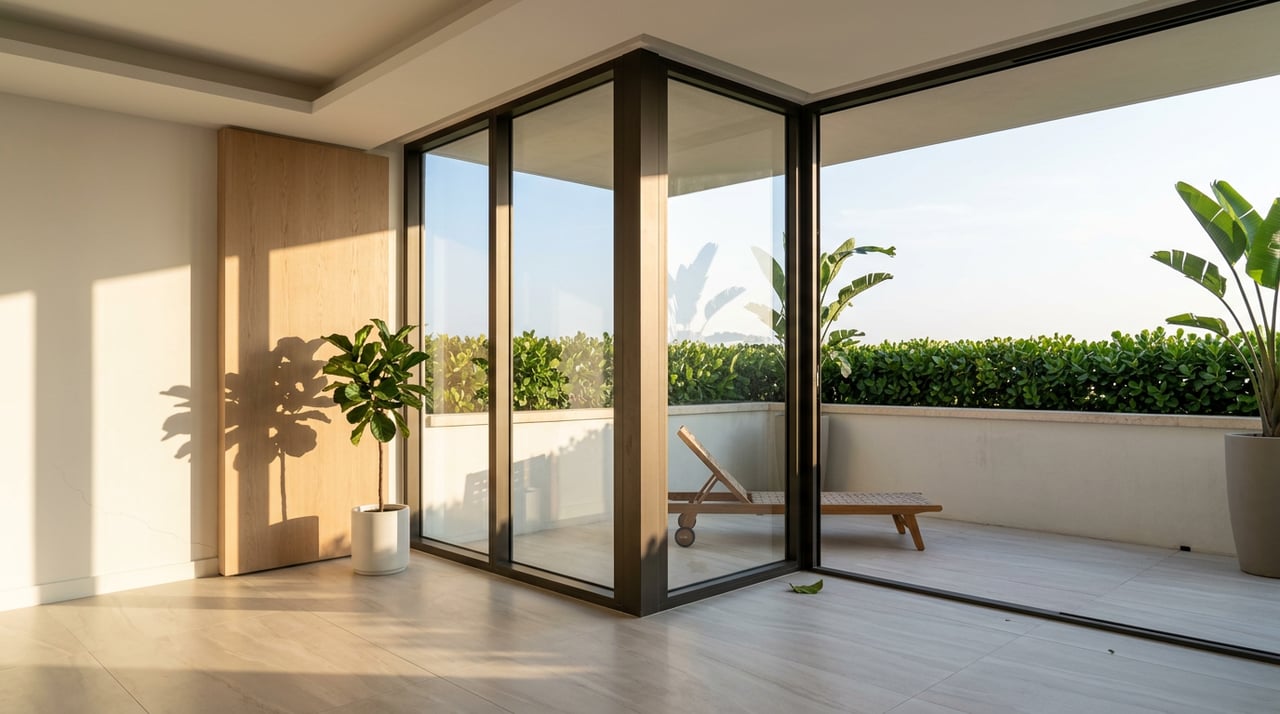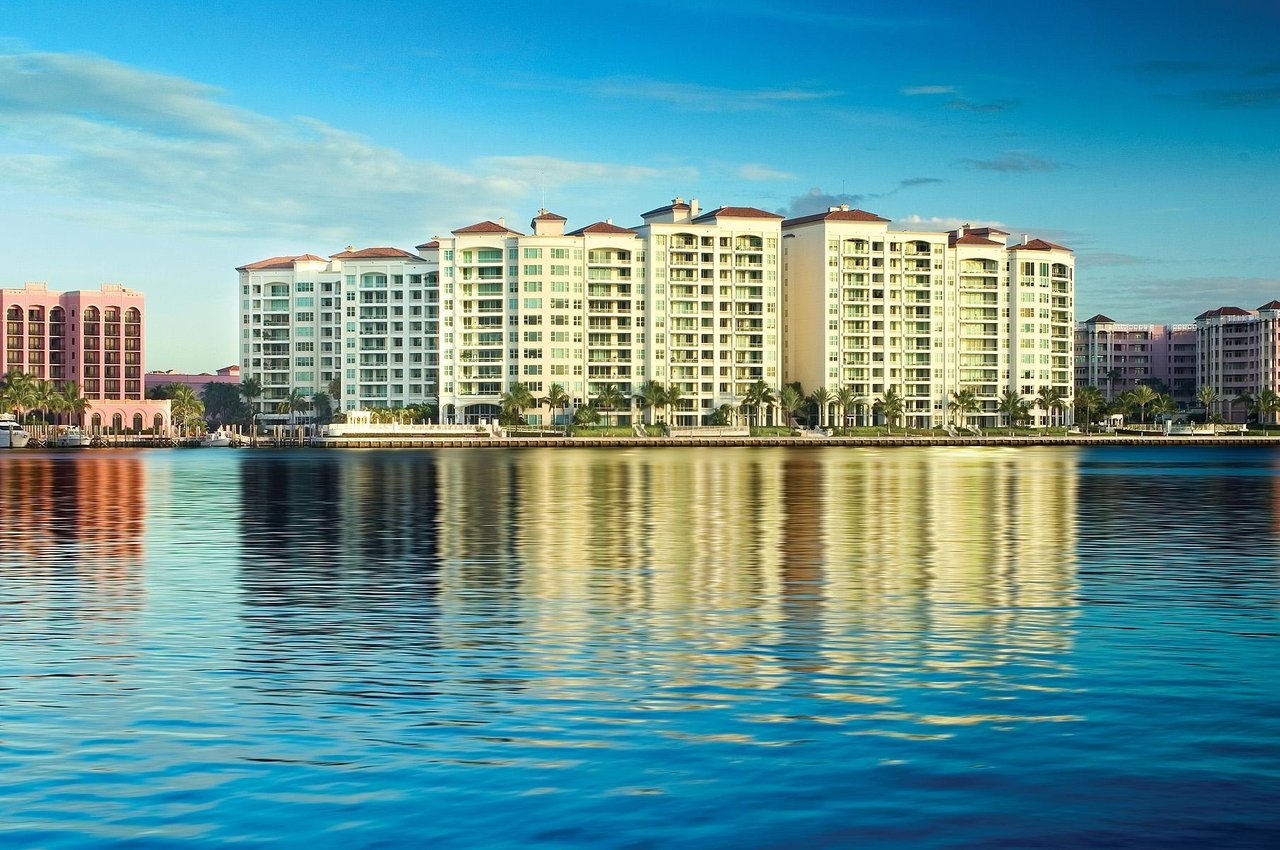
A look at what the market has paid for residences here, what's quietly changed about the building, and what's coming next on the grounds. Written for the people who already live here.
Over the last five years, thirty residences at Mizner Grand have changed hands. The total: roughly $127 million in transaction volume. The average sale today closes at about thirty-eight percent more per square foot than five years ago — and the building has spent most of that period under construction.
That last detail is worth sitting with. The market has been bidding up Mizner Grand while half of its common areas were behind plywood. The renovation — what the architects, Solomon Cordwell Buenz, named "Coastal Luxury Reimagined" — is now in its final stretch. What the data suggests, and what I see day-to-day from the buyer side, is that the next chapter has barely begun pricing in.
This is the first of what will be an annual letter to the residences at Mizner Grand. The point of it is straightforward: to give owners a serious, factual read on where their building stands in the market — whether or not they are thinking about selling. Most years, most owners aren't. The information should still be theirs.
I — The Numbers
What the last five years actually show
From early 2021 through the first quarter of 2026, the MLS records thirty closed sales at Mizner Grand. With approximately 138 residences in the community, that represents around twenty-two percent of the building turning over in five years — roughly four percent annually. By any reasonable benchmark for a luxury waterfront condominium, that is a held building. People do not move out of Mizner Grand quickly.
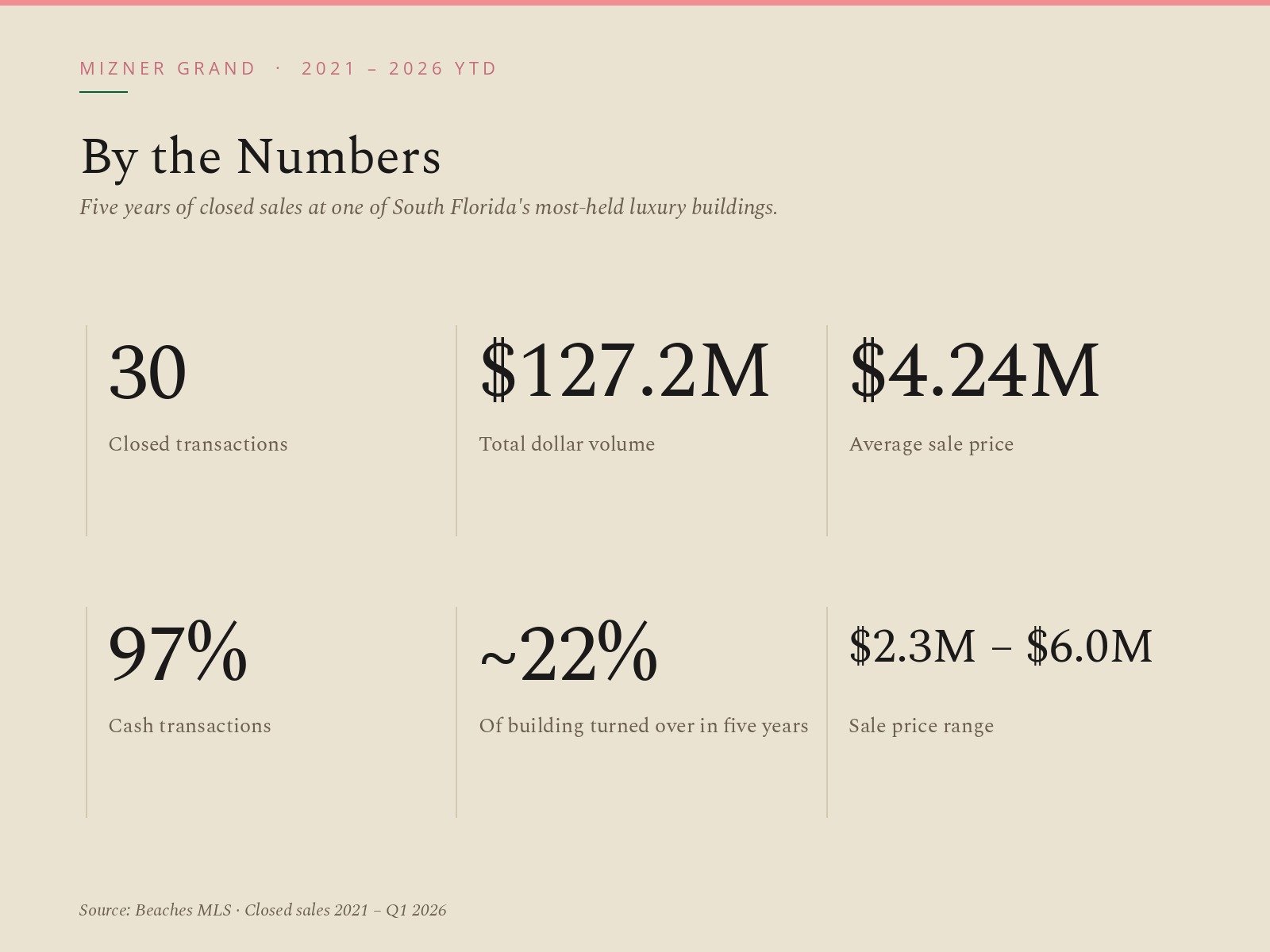
The dollar-volume average understates the high end. Two residences sold at full asking price in 2022, both at $6.0 million. The strongest price-per-square-foot trade in the dataset cleared at $1,314 in late 2022 — a center-stack residence that closed essentially without negotiation. The most recent comparable trade, a Lanai residence with a private pool, closed in March 2026 at $1,291 per square foot.
Pricing has firmed, then steadied, then firmed again
The most useful way to look at the trajectory is per square foot, normalizing for unit size:
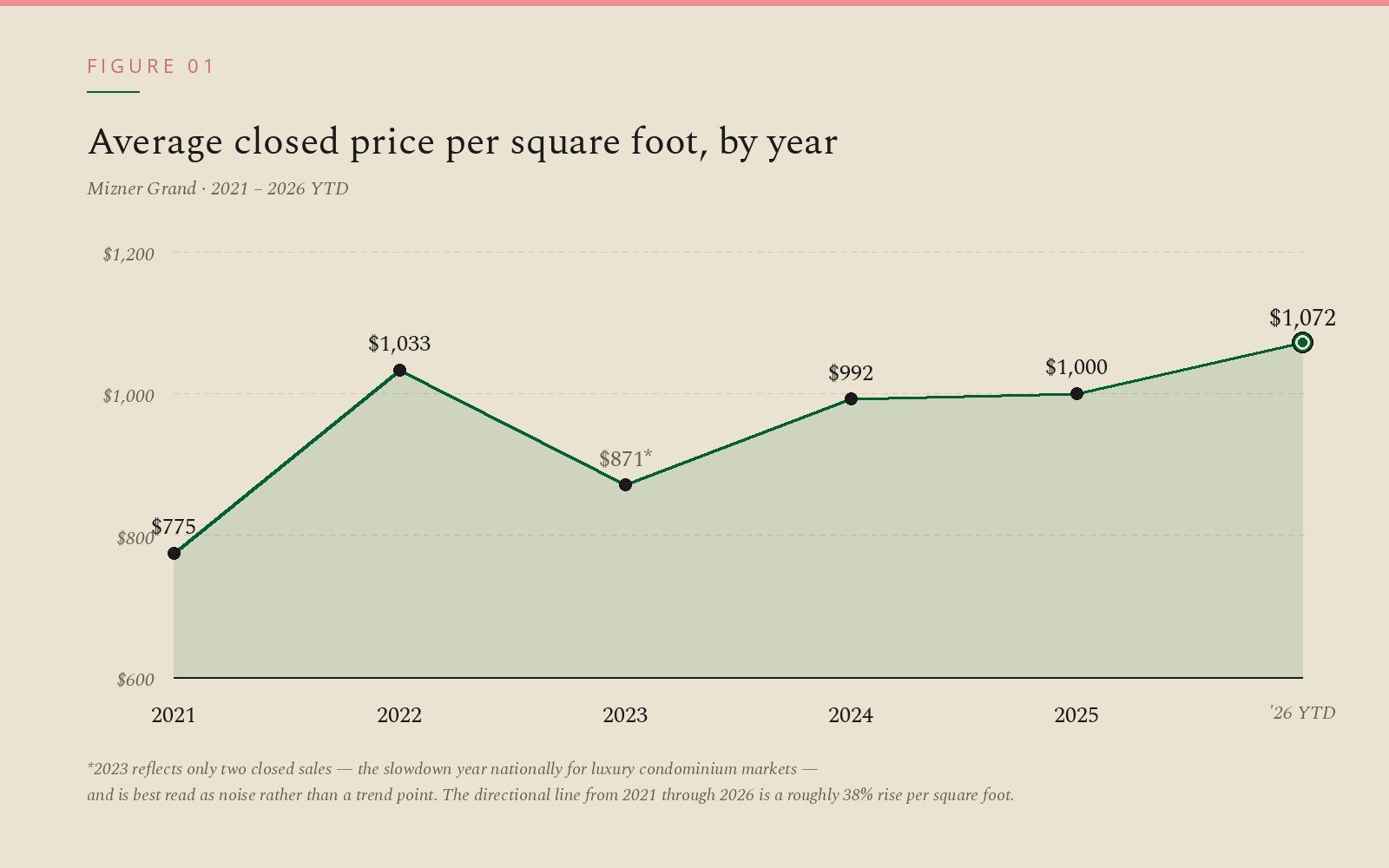
A few observations the chart doesn't show on its face. Sale-to-list ratios have held in the high-eighties to low-nineties across the period, with several individual closings at or near full ask — the median story is one of disciplined buyers and disciplined pricing, not panic on either side. Days on market is bimodal: properly priced residences are clearing in single-digit days; mispriced or dated residences sit. The median is around seventy days, but the average is dragged up by a small number of long-stale listings that ultimately required substantial reductions. Cash dominates almost entirely. Of the thirty closed sales, twenty-nine were all-cash. One was financed.
That last point matters. A buyer base that does not require financing is a buyer base that does not move with mortgage rates. The Mizner Grand market has a built-in insulation against the macro cycle that most condominium markets do not.
II — The Foundation
Why the building's value is structural
Numbers describe what has happened. They do not, on their own, explain why. The reason Mizner Grand has continued to clear at premium prices through a major construction project, a national rate cycle, and an evolving luxury landscape is that the underlying assets of the building cannot be replicated. They aren't choices — they are facts.
The grounds
Mizner Grand sits on the grounds of The Boca Raton — the century-old, 337-acre destination resort and private club acquired by Michael Dell's BDT & MSD Partners in 2019 and the subject of roughly $375 million in renovation and reinvestment since. The footprint, the history, and the access cannot be re-created at any price. Buyers pay a premium for the address and the experience that comes with it: the gates, the manned security, the resort access, the way arrival and daily life are choreographed. There is no second piece of land in Boca Raton that offers this. There never will be.
The water
The building fronts Lake Boca directly. East-facing residences capture sunrise across the lake and out to the Atlantic; west-facing capture sunset across the city and the Intracoastal. The view inventory is finite — and on the east side, the view is unobstructed and protected by the lake itself.
The floor plates
Recorded living areas in the closed-sale dataset range from approximately 4,200 square feet to nearly 5,900 square feet. Center-stack residences run roughly 4,200 square feet. Lanai residences run larger. Penthouses larger still. New luxury construction in Boca, in Palm Beach, and in most of South Florida is not building at this scale anymore — economics push developers toward smaller, denser units. Existing inventory of 4,000-plus-square-foot waterfront residences with private elevator entries and direct lake exposure is not replenishing. It is becoming scarcer with every project that breaks ground.
The walk
Mizner Park, the resort's amenities, the beach, and a credible restaurant economy are all genuinely walkable from the building. That is not a small thing. It is what permits the lock-and-leave second-home use case that defines a meaningful share of buyer demand in this segment.